
Maintaining full emergency operations during major expansion and renovation
Market
Healthcare
Key Services
Construction
Preconstruction
Self-Perform
Steel Fabrication
Virtual Design & Construction
Delivery Method
Construction Manager at Risk (CMAR)Self Perform %
17Capacity
68,000 SFWork Hours
90,000The challenge
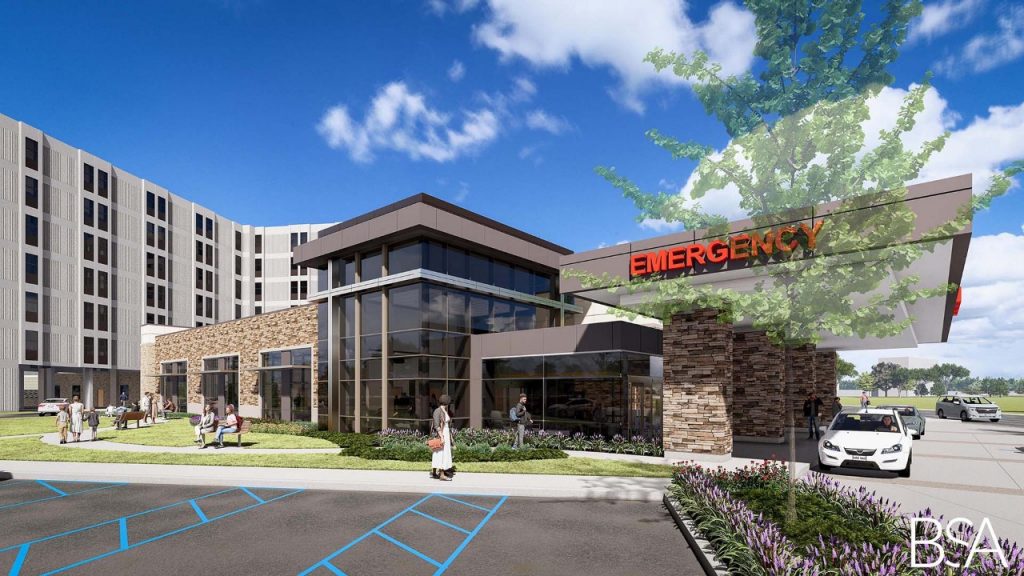
Mercy Hospital South required a significant expansion and renovation of its emergency department while maintaining uninterrupted operations across the active hospital campus. Alberici is delivering a 36,000 SF renovation and 32,000 SF expansion to support increased patient demand and enhanced care delivery. The new emergency department will include 48 standard exam rooms, nine low-acuity bays, four triage rooms, six enlarged trauma bays, a 13-bed behavioral health area, expanded waiting space, and ICU-style care pods with direct nurse sightlines.
Maintaining seamless emergency department operations throughout construction was critical. Mercy South is one of the busiest emergency departments in the St. Louis region, serving more than 67,000 patient visits annually and receiving approximately 200 ambulance arrivals per day. The hospital functions as a Level II trauma center, Missouri’s only Level I stroke and STEMI center, and a vital regional healthcare facility for southern Missouri. Any disruption to access, patient flow, or emergency response posed significant operational and clinical risks.
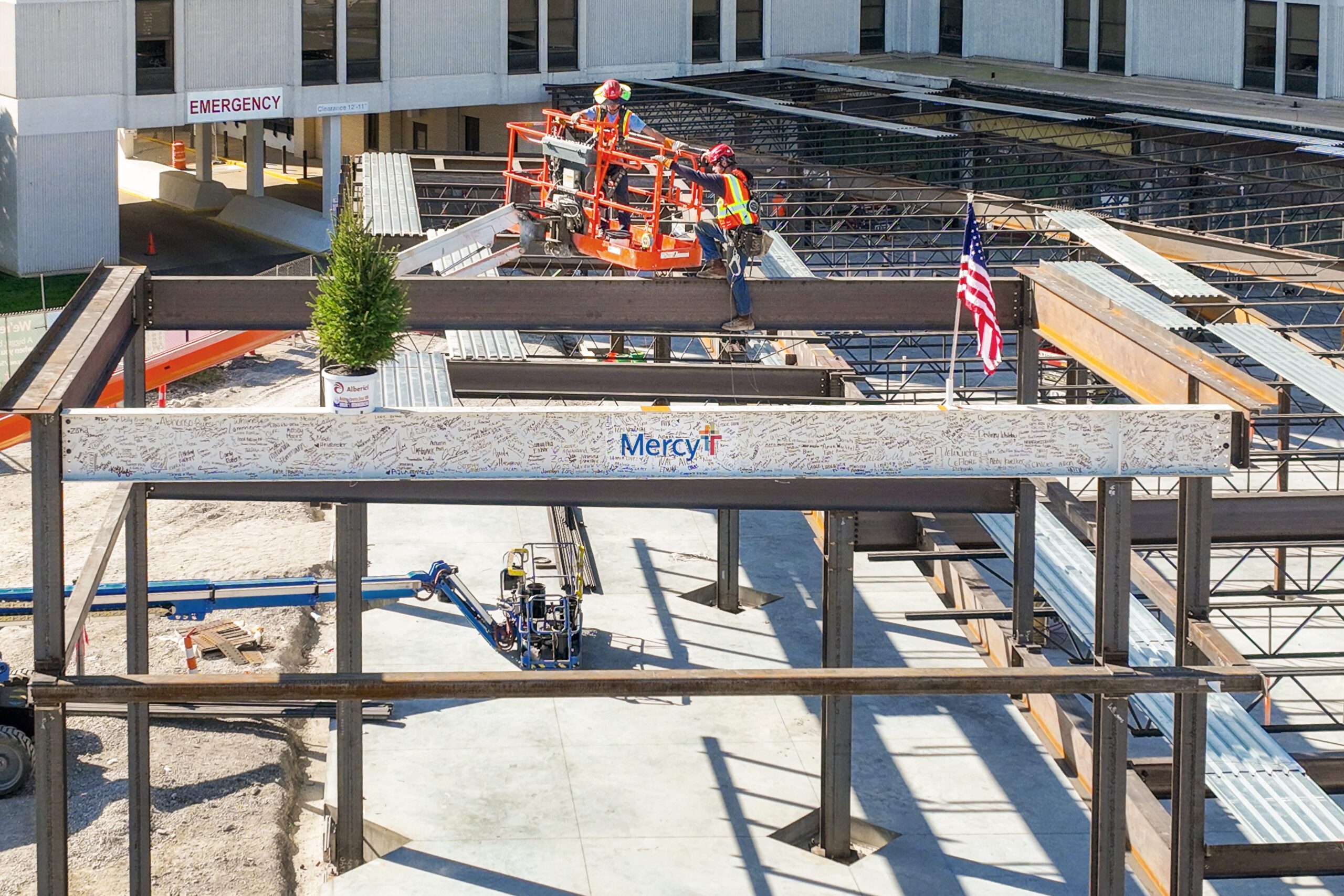
Key Facts
Multi-phase to minimize disruption
200 ambulances/day during construction
Level-II Trauma Center
Challenge met
From the beginning, Alberici worked closely with Mercy Hospital South to minimize operational impacts and maintain continuous emergency services throughout construction. The project was originally planned as an eight-phase effort, which presented ongoing disruption risks to staff, patients, and emergency responders. Through early collaboration and detailed planning, Alberici partnered with hospital leadership to consolidate the work into two carefully sequenced phases, significantly reducing the duration and complexity of operational interruptions.
Virtual construction and coordination tools continue to play a key role in maintaining clarity and alignment among stakeholders. Alberici utilizes CM Builder and Revizto to visualize construction activities, evaluate phasing scenarios, and clearly communicate anticipated impacts to hospital operations. These tools allow clinical staff, facilities teams, and project partners to understand spatial constraints, access changes, and sequencing well in advance. By combining streamlined phasing with proactive digital coordination, the project team has preserved emergency department functionality while advancing a complex renovation and expansion within an active, high-volume healthcare environment. The project is on-track for completion in 2027.
Recent Projects
Steven & Susan Lipstein BJC Institute of Health (BJCIH) Vertical Expansion
Mercy Center for Performance Medicine & Specialty Care