Strengthening a critical link in the Great Lakes Navigation System
Market
Civil & Marine
Heavy Industrial
Key Services
Construction
Self-Perform
Strategic Partnerships
Virtual Design & Construction
Delivery Method
General Contracting (GC)Self Perform %
85Work Hours
400,000The challenge
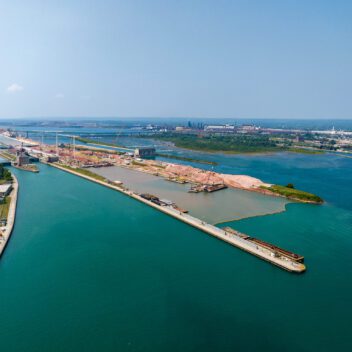
Situated along the U.S.–Canada border connecting Lake Superior and Lake Huron, the Soo Locks Complex serves as a cornerstone of North American transportation. Annually, over 4,500 ships transit the locks, moving roughly 80 million tons of cargo, including advanced high-strength steel essential to the nation’s automotive and appliance manufacturing sectors. However, because just one lock was capable of accommodating modern-day freighters, the historic, 19th-century infrastructure posed a significant vulnerability to Great Lakes commerce.
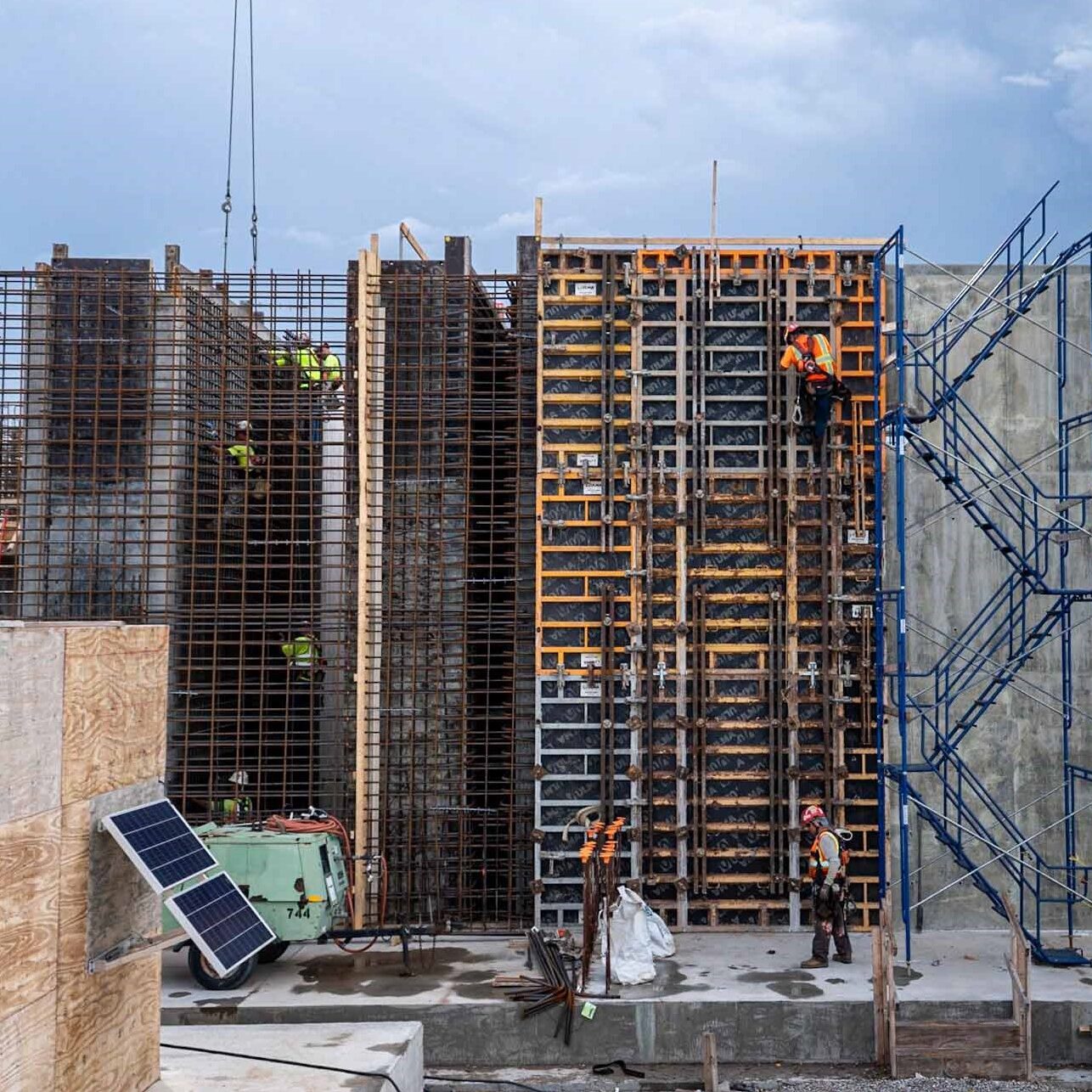
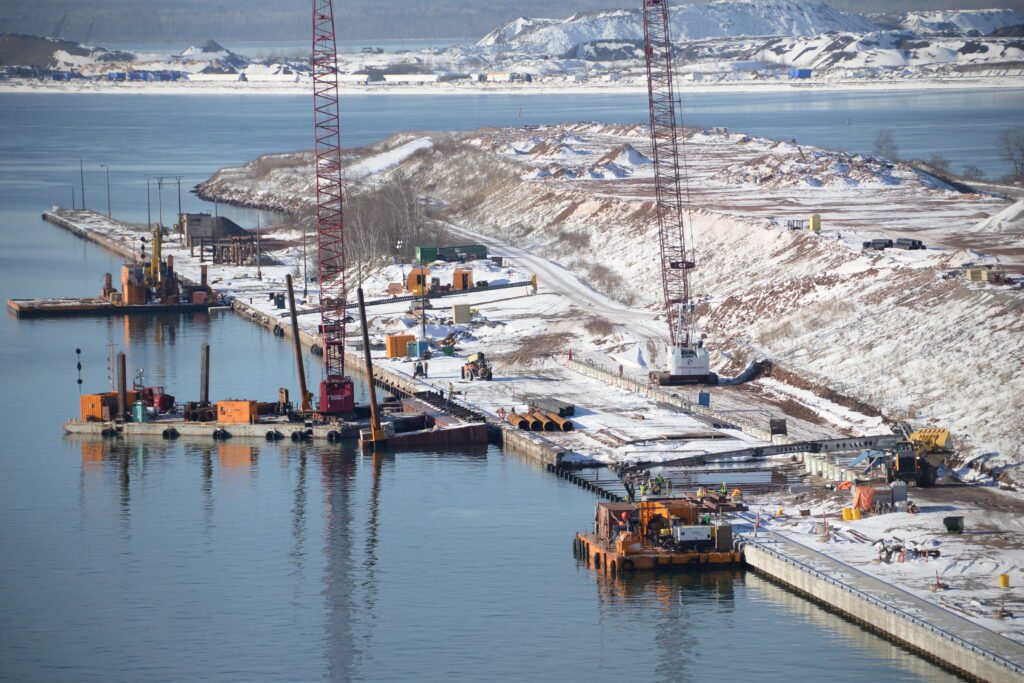
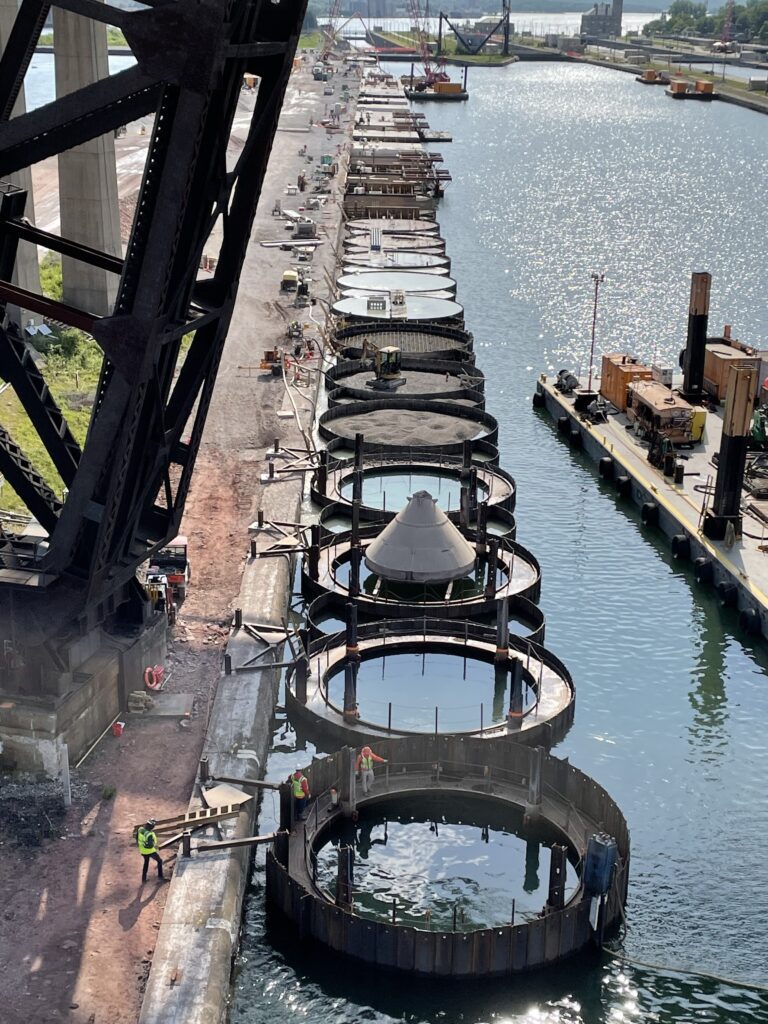
Phase 2 of the U.S. Army Corps of Engineers’ plan to add a second lock capable of handling the largest 1,000 foot lake freighters required the rehabilitation of the upstream approach walls by installing more than a mile of new structures in a newly deepened channel reaching 30 feet in depth. The approach walls included a combination of sheet pile cells, z pile walls, and soldier piles with concrete lagging, all topped with reinforced concrete cap slabs, integrated mooring bits, lighting, and fendering.
Construction called for more than 60,000 cubic yards of concrete, produced in an on site batch plant operated by the joint venture team, and 30,000 cubic yards of underwater tremie concrete placed under strict mass concrete thermal control parameters. The site’s location on an island made it inaccessible by vehicle, requiring all materials and labor to be ferried across the active federal navigation channel or delivered directly by lake freighter. The work had to be completed in extreme weather conditions, with limited laydown space, and without disrupting continuous vessel traffic.
Key Facts
Rehabilitation of over one mile of upstream approach walls in 30 foot deep channel
Over 60,000 cubic yards and 30,000 cubic yards of underwater tremie concrete produced on site
Best Project in Water/Environment and Project of the Year finalist from Engineering News Record Midwest
Installation of sheet pile cells, z pile walls, and soldier pile walls with reinforced concrete caps
Challenge met
The Kokosing Alberici team completed the complex project through careful sequencing, innovative construction methods, and close coordination with the U.S. Army Corps of Engineers and other stakeholders. All materials and equipment, from high horsepower tugboats and customized deck barges to cranes, batch plant components, and precast panels, were transported across the navigation channel. The on site dual drum batch plant enabled continuous production of high quality concrete, eliminating the need for barge delivery and allowing tight control over temperature requirements for tremie placements. Skilled divers completed confined space underwater work to support pile installation, concrete placement, and inspection tasks.
The Kokosing Alberici team self-performed the majority of the work, including all marine, civil, and pile driving operations. Despite extreme winter weather, strong winds from Lake Superior, and the challenges of working over water in an active shipping lane, the project was completed without a single safety incident. The team’s execution strengthened a critical piece of the Great Lakes Navigation System while supporting the local community through donations, sponsorships, and volunteer efforts.
Recent Projects
Seismic Repair of Dry Docks for NAVFAC Northwest
Dresden Island Lock & Dam Miter Gate Installation and Machinery Replacement