Expanding an active Ford manufacturing facility while keeping production moving
Market
Automotive
Key Services
Construction
Preconstruction
Self-Perform
Steel Fabrication
Strategic Partnerships
Virtual Design & Construction
Delivery Method
Progressive Design-Build (PDB)Capacity
425,000 SFThe challenge
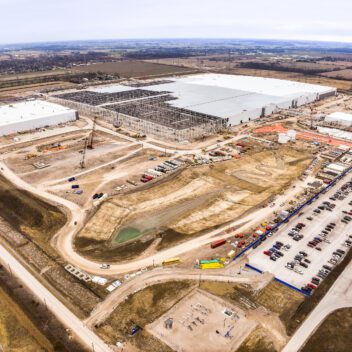
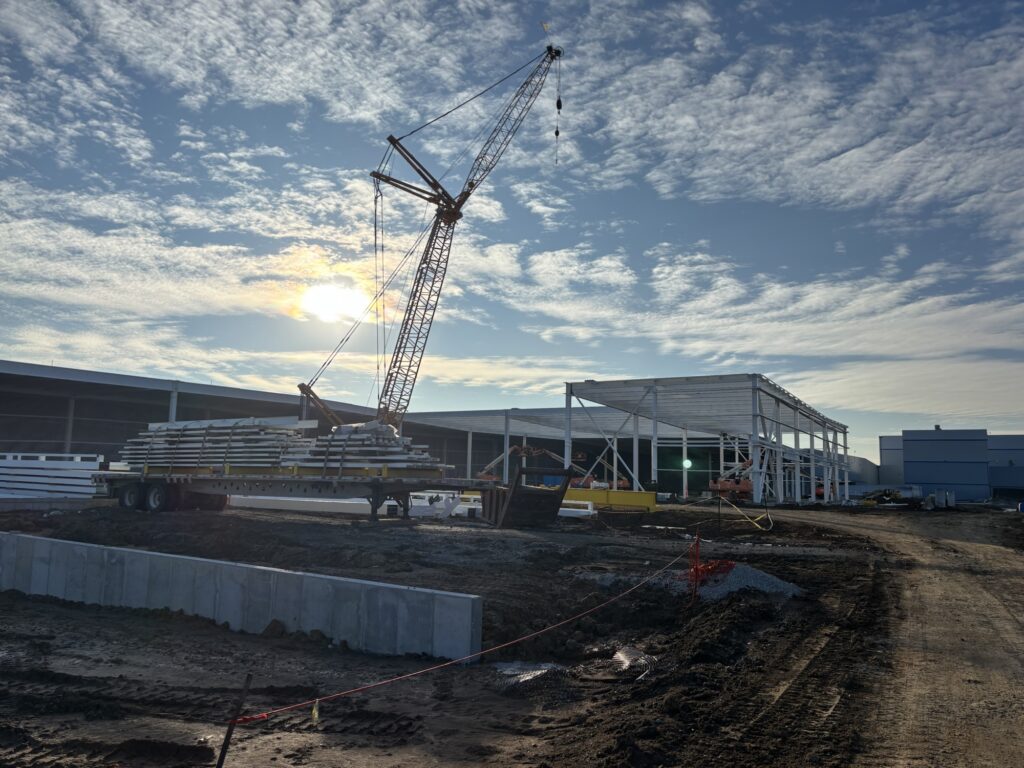
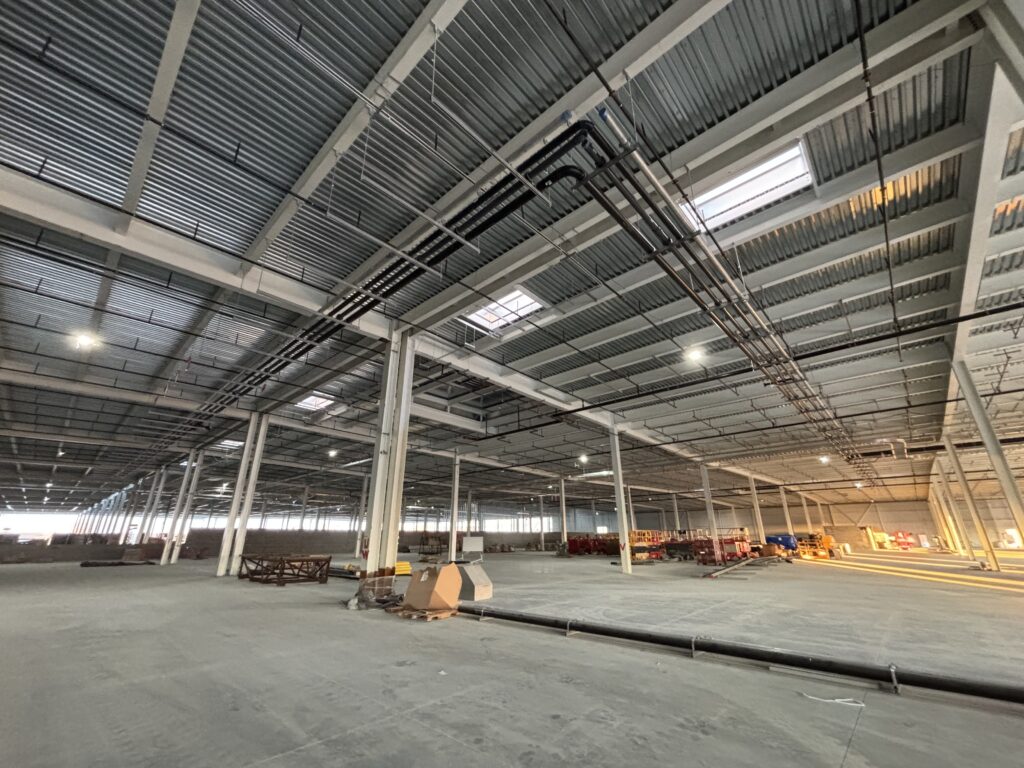
Ford expanded its Kansas City manufacturing operations with a 425,000 SF addition to an existing stamping facility. The project added manufacturing space, docks, team rooms, a new substation, compressor room, offices and critical tie-ins to the existing facility.
Construction of the addition eliminated an existing access road used by trucks delivering parts to the plant’s docks, creating a significant logistics challenge within the active manufacturing campus. Alberici needed to advance construction while maintaining the flow of materials required to support Ford’s ongoing operations.
The project also evolved considerably during construction. Ford increased the project scope and contract value by nearly 40%, adding three ancillary additions, a new firewater pump house, employee parking lot and a mezzanine office expansion while maintaining the original turnover dates for critical-path areas.
Key Facts
425,000 SF manufacturing facility addition
400,000+ cubic yards of earthwork completed across the project site
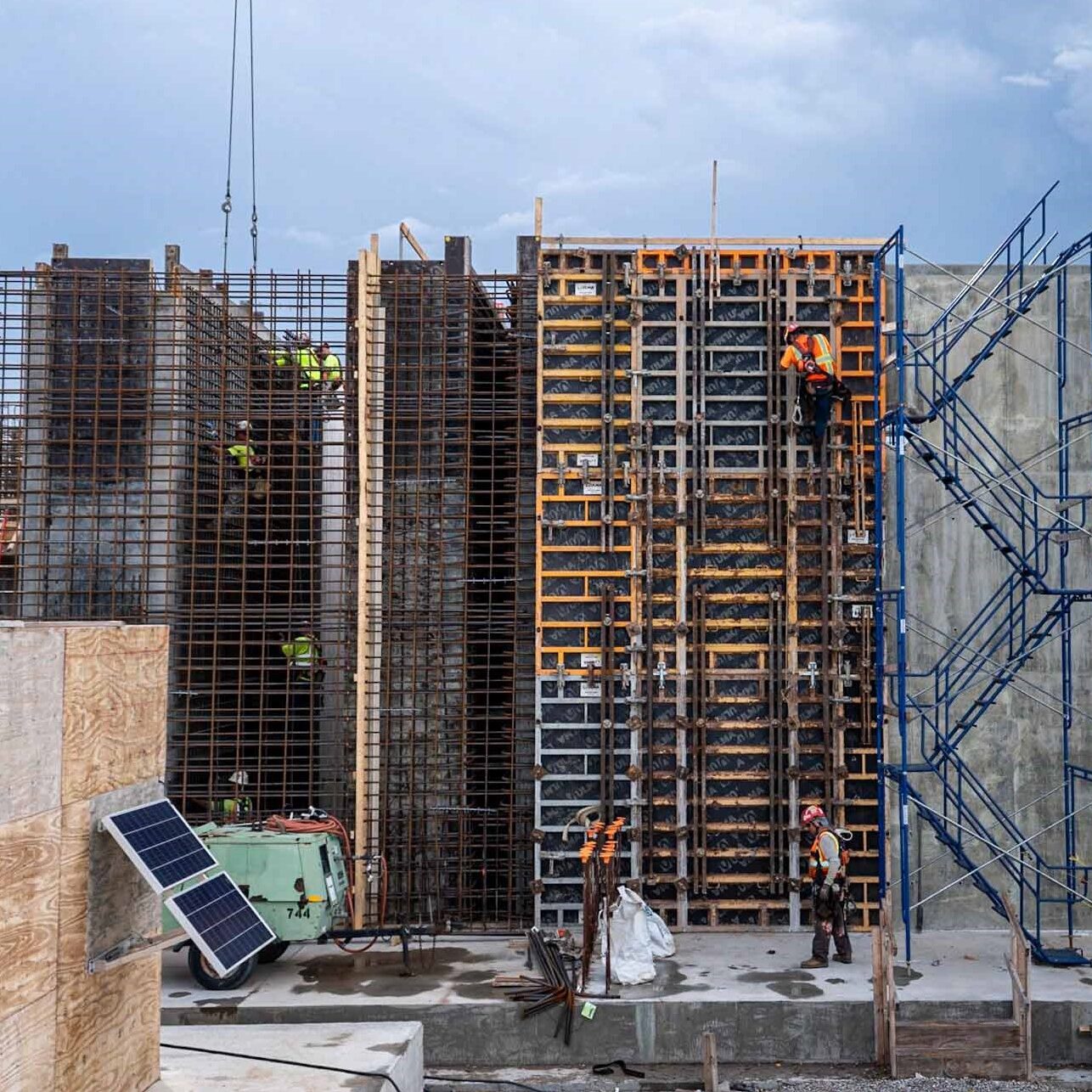
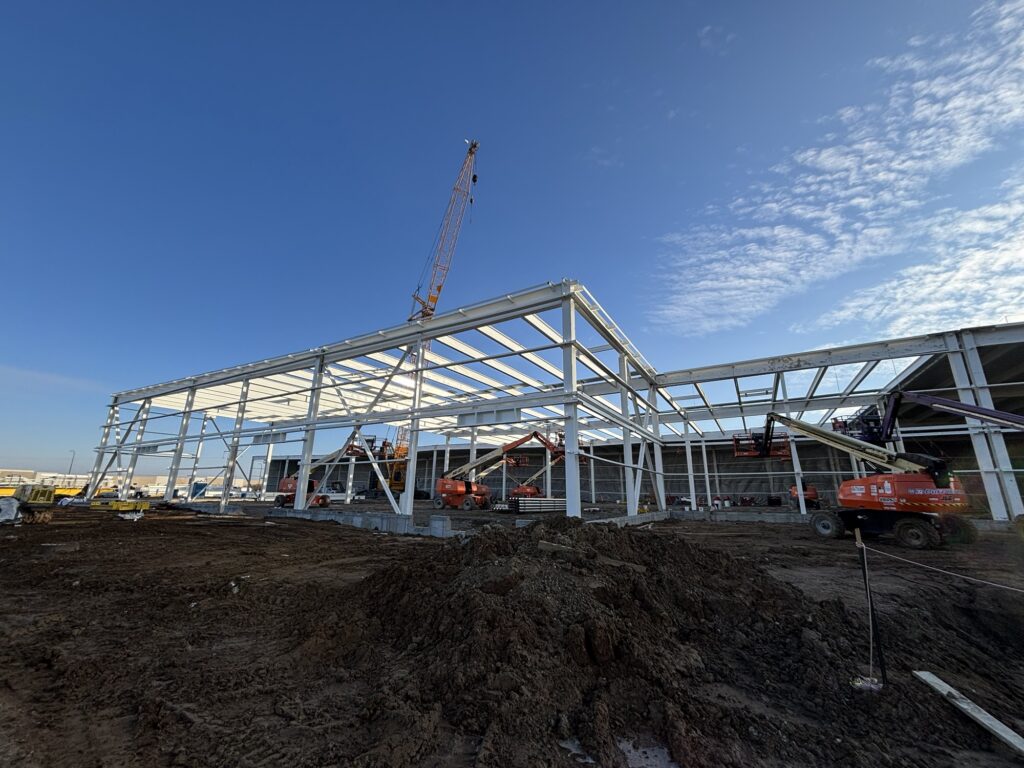
2,700 tons of structural steel incorporated into the expansion
Nearly 40%
increase in project scope and contract value while maintaining original critical turnover dates
Challenge met
Alberici developed a carefully sequenced construction plan to minimize the amount of time Ford’s existing truck access road would be unavailable. During the six-month interruption, Ford transitioned material deliveries to over-the-road trucking using public roads, allowing construction to advance while maintaining the flow of materials to the plant.
The team completed the new ring road ahead of schedule, allowing production traffic to return to plant property sooner than planned. At the same time, Alberici incorporated substantial additional scope without changing the original turnover dates for critical-path areas.
In total, the project included more than 400,000 CY of earthwork, 2,700 tons of structural steel and 425,000 SF of roofing and slabs. Despite the expanded scope and complex logistics of working around an active manufacturing operation, the project was completed safely, on time and under budget.
Recent Projects
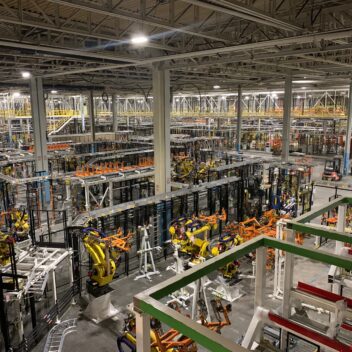
General Motors – Oshawa Body Shop Tooling T1 Flex Program

Saronic Louisiana Shipyard Expansion